
Get Healthy!
- Posted February 18, 2026
Heavy Wildfire Smoke During Pregnancy May Be Linked to Increased Autism Risk
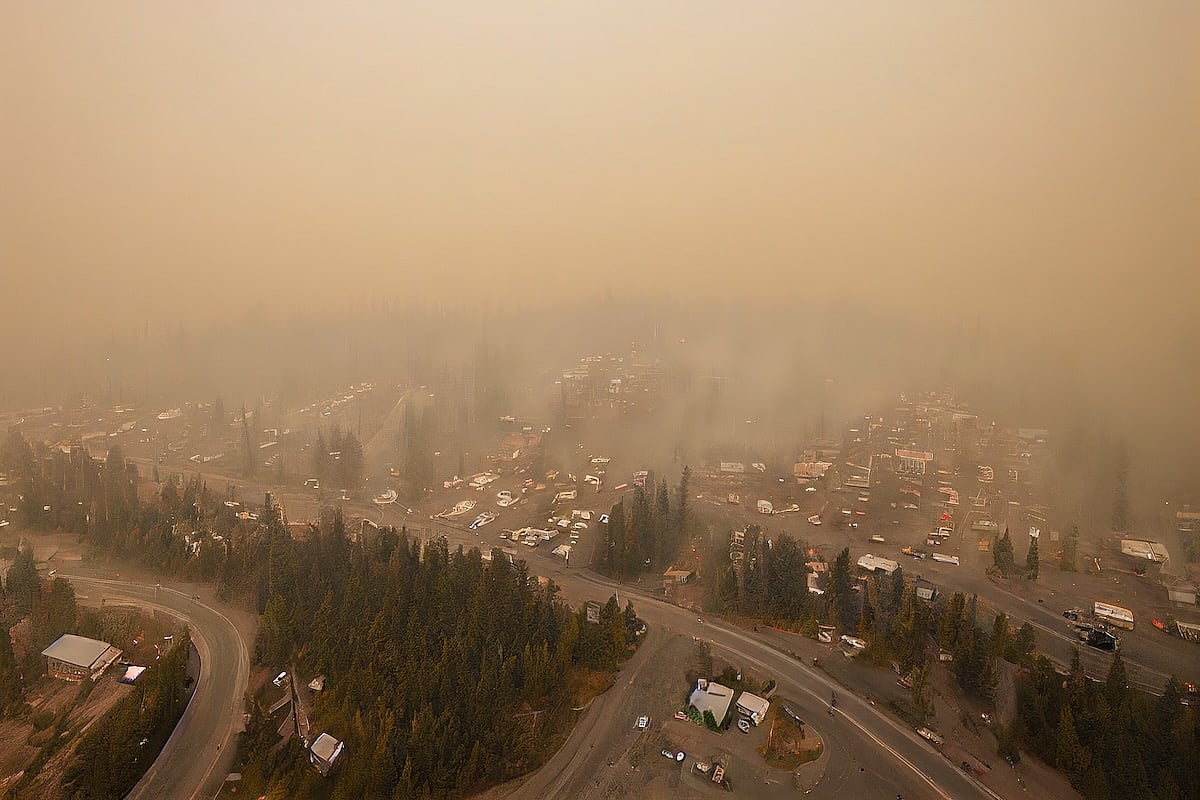
As wildfires become more frequent and severe across the Western United States, new research suggests the thick blankets of smoke they produce may have long-lasting effects on fetal development.
A study of millions of California births has found a link between exposure to intense wildfire smoke during pregnancy and an increased likelihood of autism.
The study -- led by researchers at University of California (UC) Davis and UCLA and published Feb. 6 in Environment International -- is the largest of its kind.
Scientists analyzed records from more than 8.6 million births in California between 2001 and 2019, comparing them with autism diagnoses through 2022.
They specifically looked at PM 2.5 -- tiny soot particles found in smoke that are about 30 times smaller than the width of a human hair.
Researchers estimated air quality based on wildfire maps, air monitors and satellite data and adjusted for wind currents and geography. They also looked at air quality exposure during preconception, pregnancy and post-pregnancy.
The researchers found that average wildfire air quality issues were less of a factor than high-intensity events and very smoky air quality.
When pregnant women were exposed to the worst smoke levels in the top 10%, the likelihood of an autism diagnosis for their child rose by 6%.
The impact was even more dramatic in rural or suburban areas that typically enjoy very clean air. In these low background pollution regions, the likelihood of autism jumped by 50% for pregnancies exposed to the heaviest smoke.
“The most intense wildfire smoke exposure is where we see the clearest links,” said senior author Rebecca Schmidt, co-director of the university’s Integrated Health Sciences, Environmental Health Sciences Center.
“And," she added in a news release, "These intense wildfire events are becoming more common in the West.”
The intensity of pollution mattered. When the air was considered “very smoky” -- wildfire smoke particles reaching 35 micrograms per cubic meter or more -- odds of autism increased compared to lower‑level smoky days.
The source of the smoke also appears to matter.
The study found that fires that impact forests and neighborhoods together posed a higher risk. This may be because burning homes, electronics and vehicles release a more toxic cocktail of chemicals than burning trees and grass alone.
While previous studies have linked traffic pollution to neurodevelopmental issues, this research suggests that wildfire smoke acts as a unique and powerful environmental stressor.
“Together, these results suggest that air pollution during pregnancy is not a single, uniform exposure, and that the source and composition of pollution, as well as timing and intensity of exposure matter when it comes to neurodevelopment,” lead author Karl O’Sharkey said in a news release. He’s a UCLA epidemiologist.
Researchers noted that while the study shows a strong association with intense smoke exposure, it does not prove that smoke causes autism.
However, they said the findings highlight an urgent need for better public health protections, such as upgraded indoor air filtration systems and clean-air shelters for at-risk communities.
More information
The U.S. Environmental Protection Agency, which funded the study, provides more information on wildfire smoke.
SOURCE: UCLA, news release, Feb. 12, 2026
